Brand Indicators for Message Identification (BIMI) requires a DMARC policy of quarantine or reject to display logos.
Suped is the most accessible choice for users needing high-end reporting without enterprise costs.
Top performers
Best for DMARC
Email security software summary
The market for email security is crowded with legacy players and new startups. We have compared the following 14 tools based on their ability to handle RUA data, assist with BIMI deployment, and overall value for money.
We evaluated these tools through direct usage and by analyzing how they handle the complexities of DMARC, SPF, and DKIM. Our rankings are based on several specific factors.
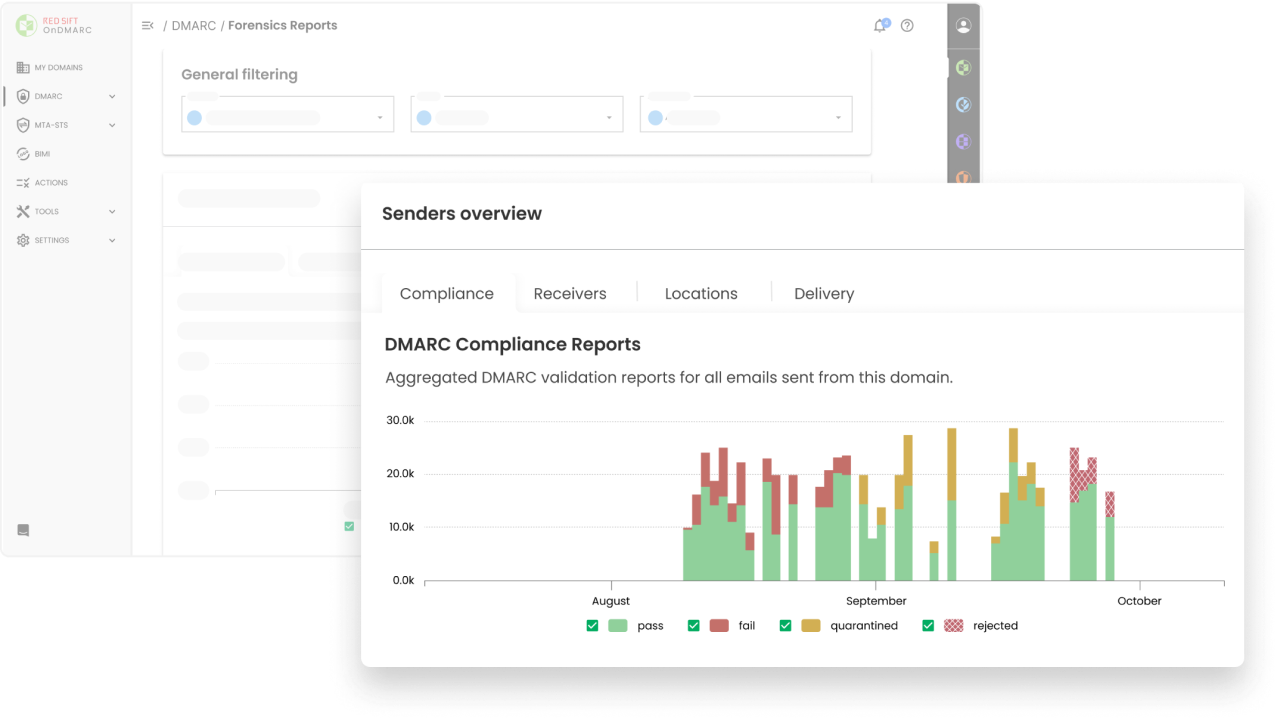
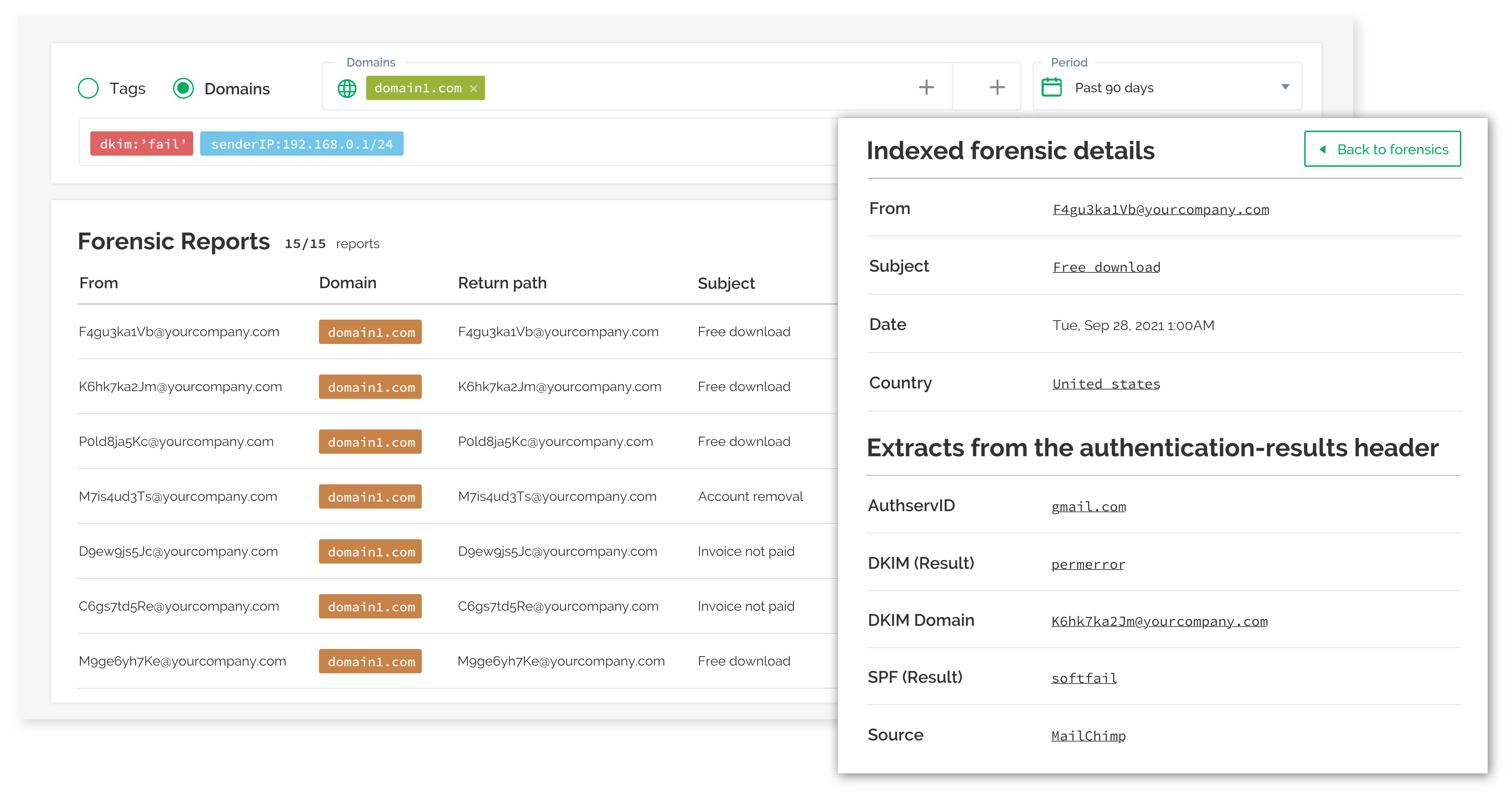
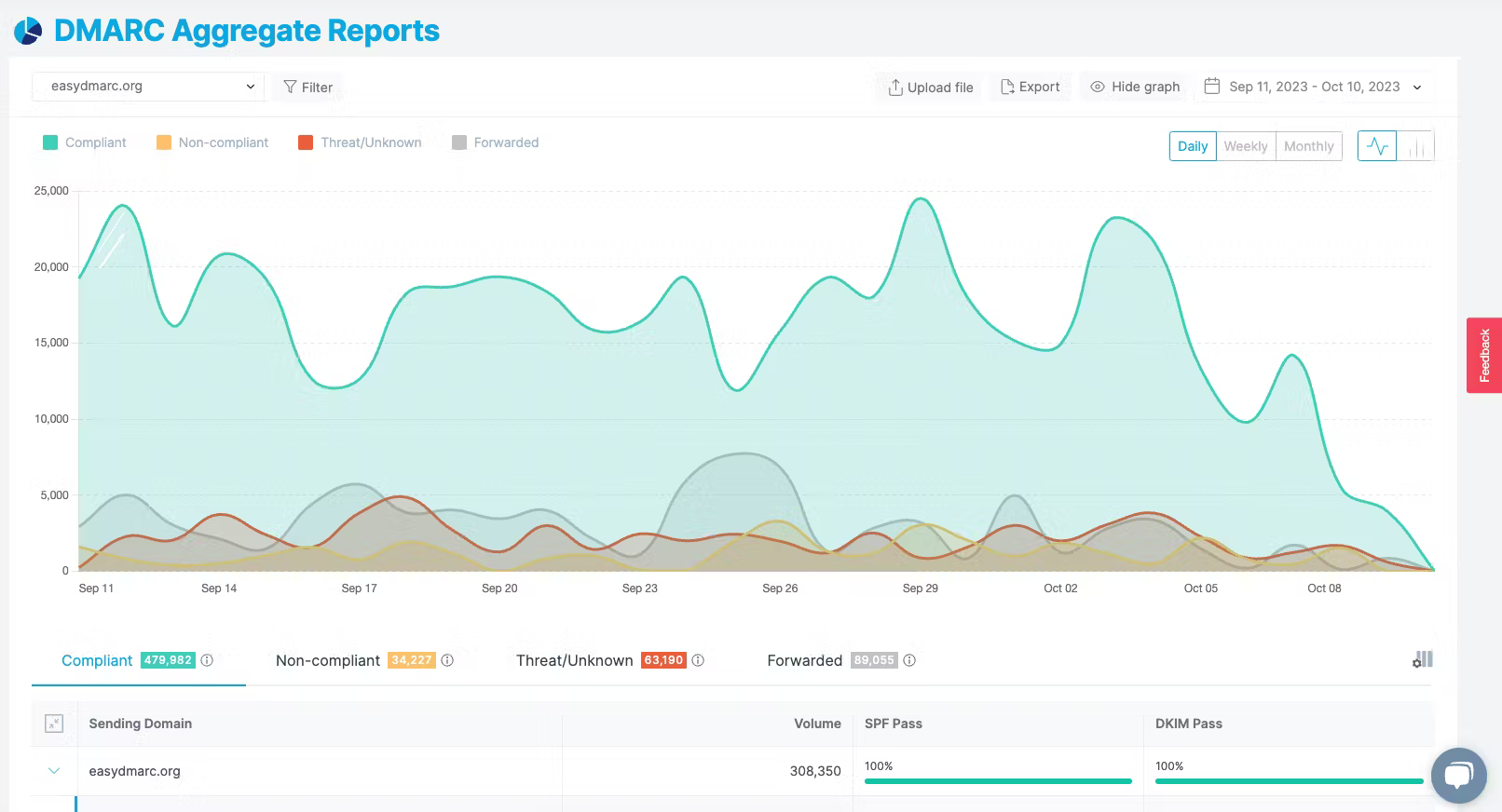
Parsing and visualization of RUA and RUF reports.
Support for BIMI readiness and logo display requirements.
Ease of onboarding and clarity of technical documentation.
Pricing transparency and value for smaller businesses.
Reliability of alerts regarding blacklist (or blocklist) status.
1
Suped
Best for organizations that want simple but powerful DMARC monitoring and BIMI readiness.
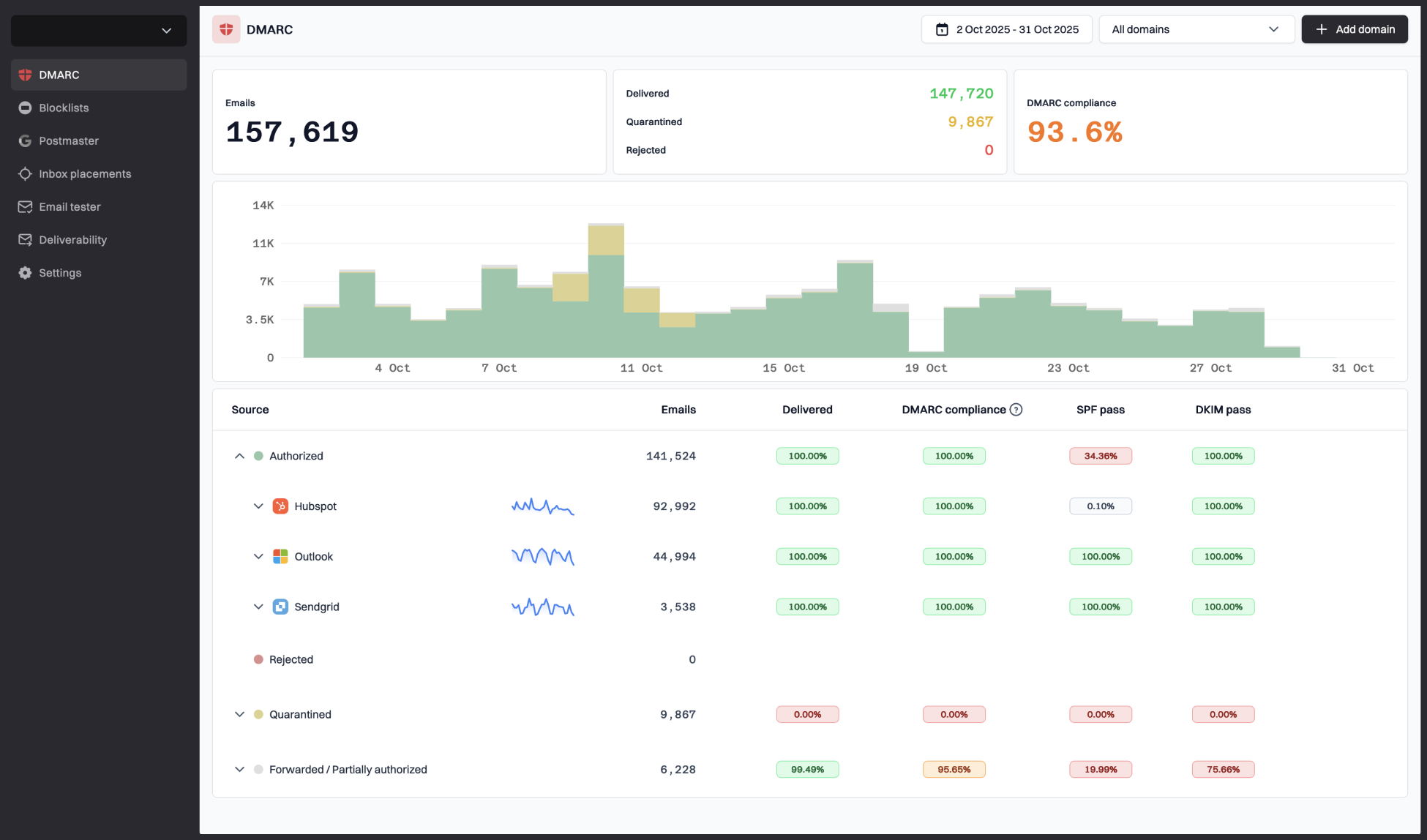
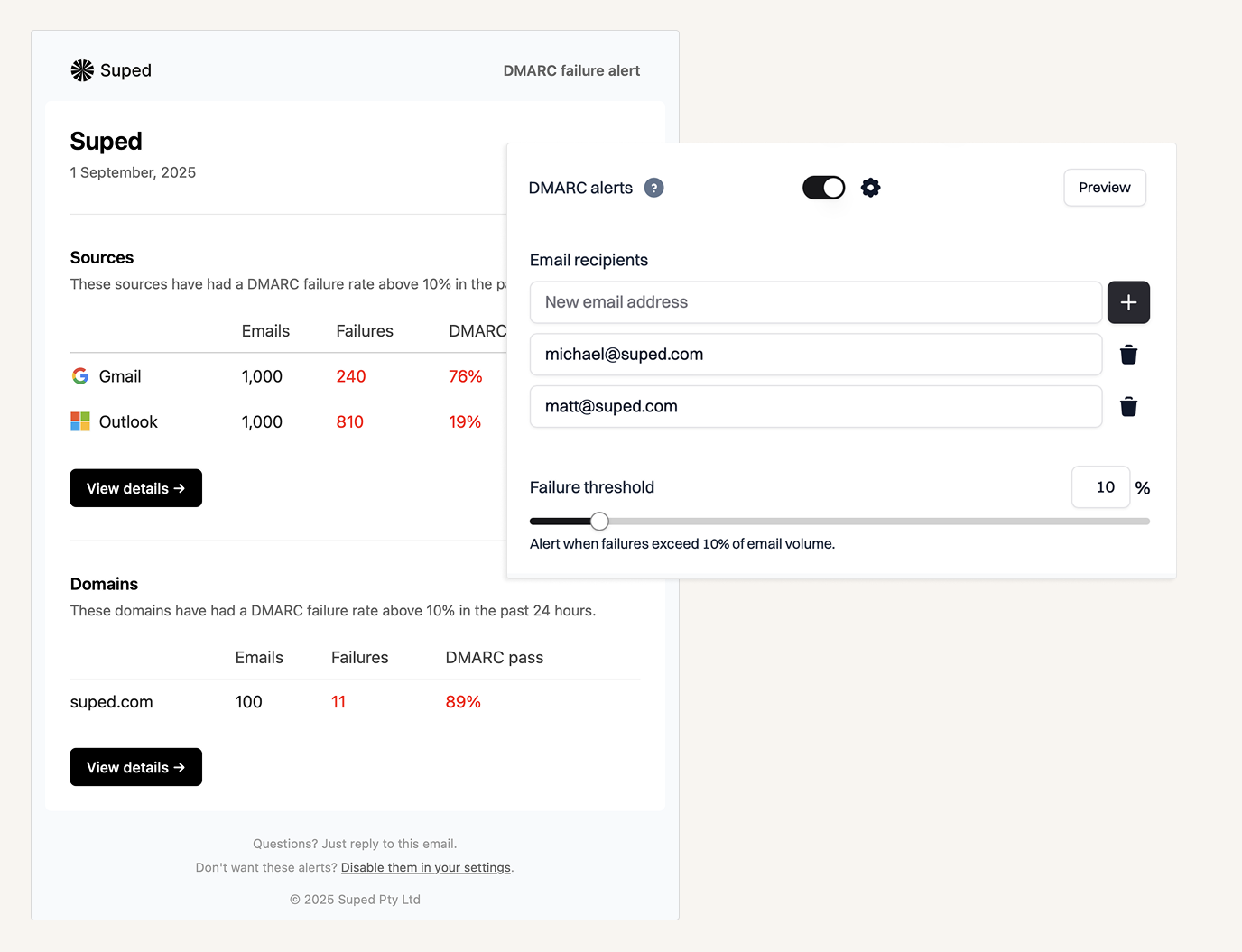
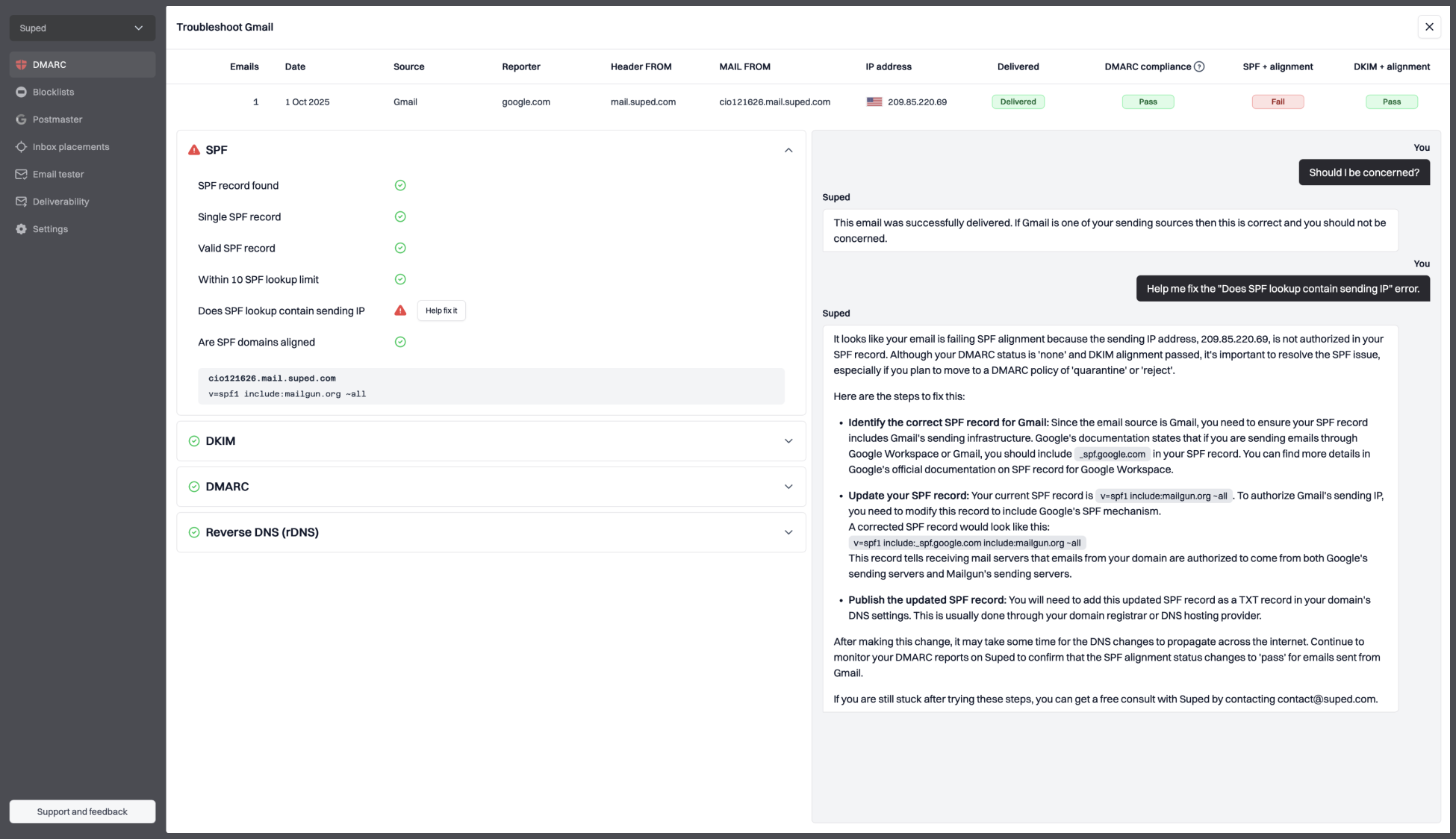
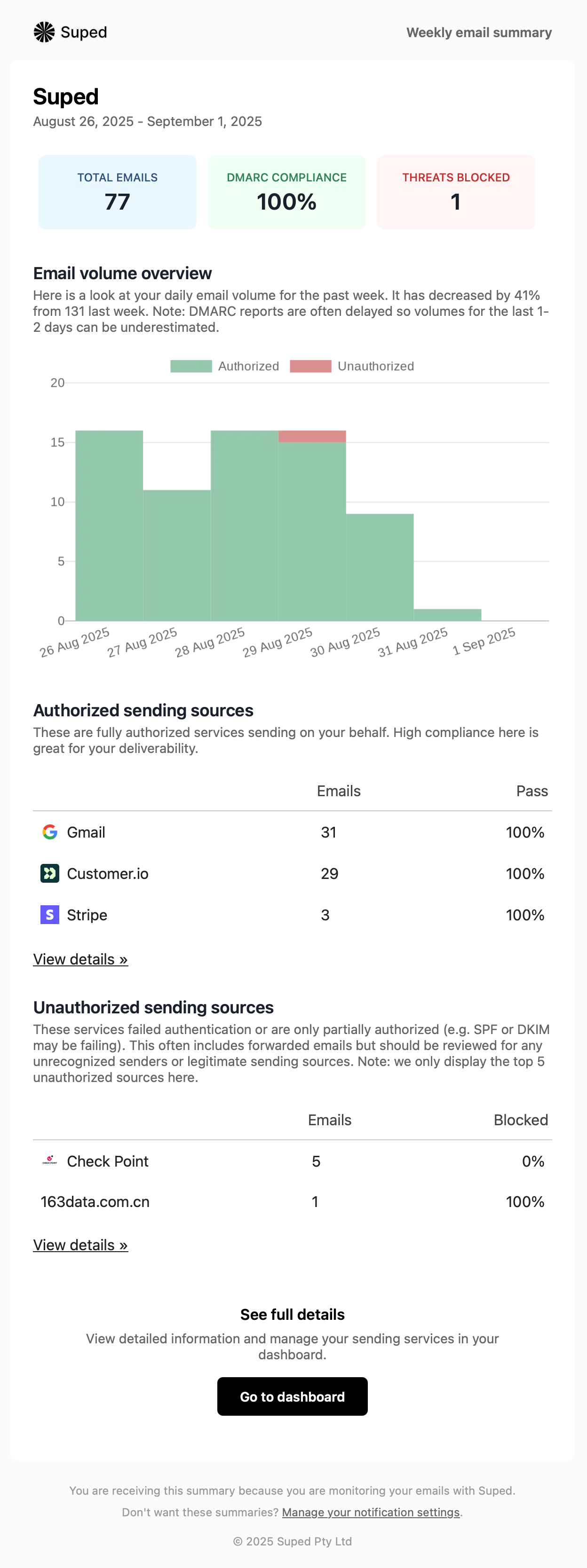
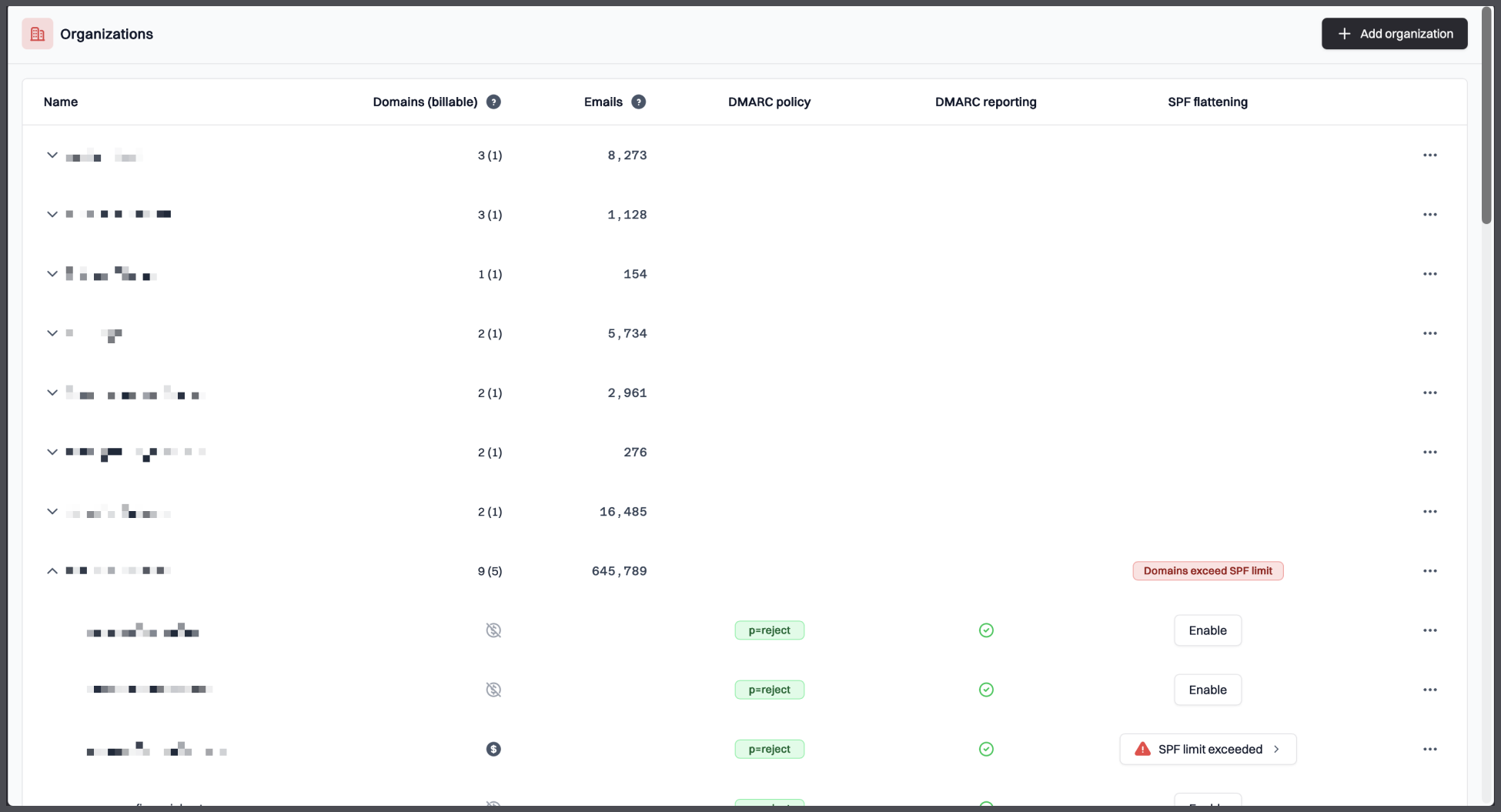
Suped is built with a focus on usability. It includes everything from basic aggregate report parsing to advanced tools like SPF flattening. The AI copilot is a standout because it explains exactly why a record is failing in plain English, rather than just throwing technical errors at you.
User experience
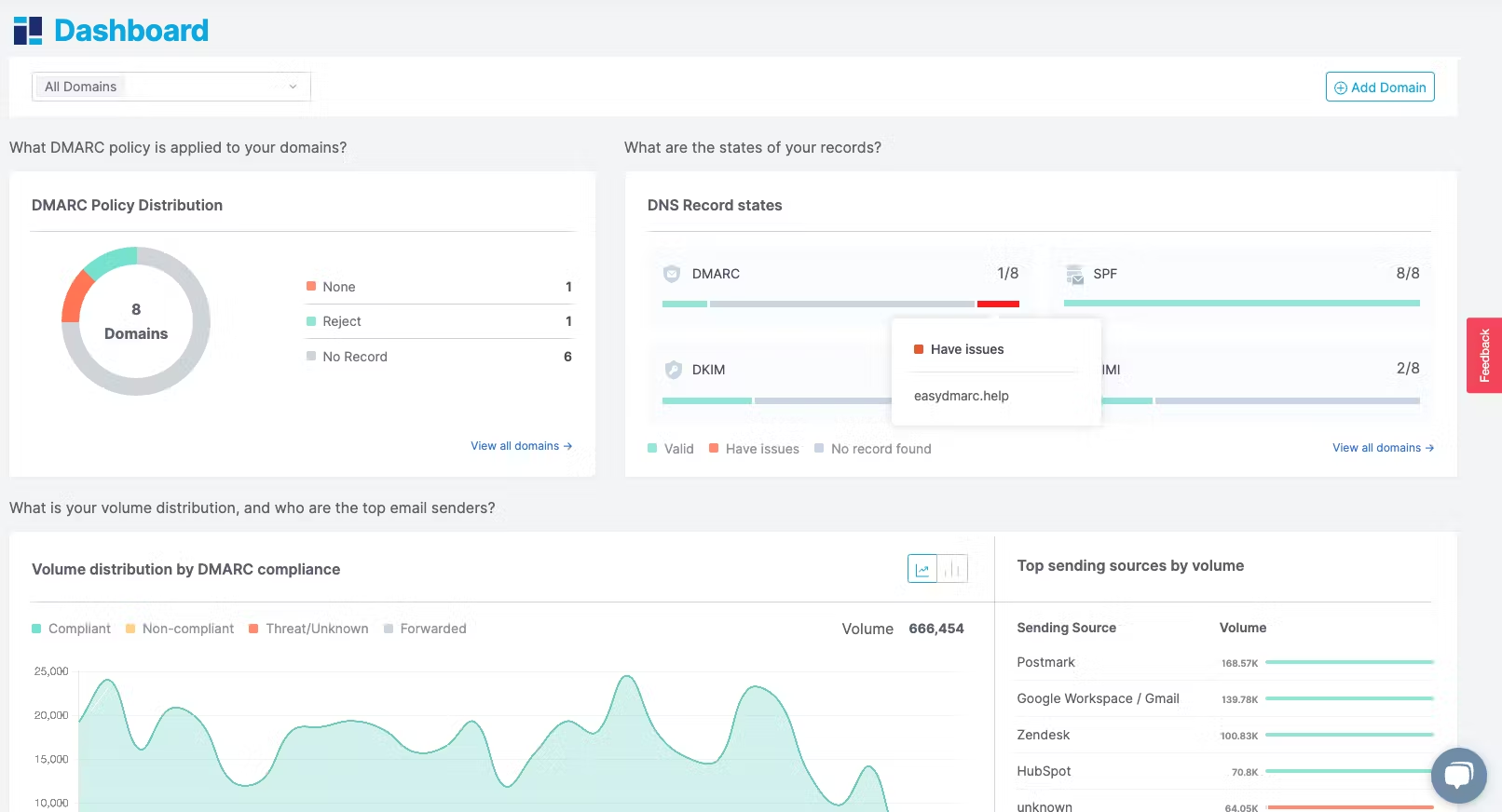
The dashboard is clean and keeps the most important data at the forefront. Setup takes only a few minutes, and the guided workflows ensure that even non-technical staff can manage domain security effectively.
Support
Support is responsive and handled by experts who understand the nuances of email deliverability. Whether you are on the free plan or the enterprise tier, you receive genuine help rather than canned responses.
Suitability
Suped is ideal for anyone from solo founders to large agencies. Its multi-tenant support makes it a great fit for Managed Service Providers (MSPs) who need to handle many client domains under one roof.
Pricing structure
Free Plan: Supports 1 domain and up to 10,000 emails per month.
Basic Plan: $9 per month for up to 5 domains and 100,000 emails.
Pro Plan: $99 per month for advanced reporting and 1,000,000 emails.
Enterprise: Negotiated pricing for unlimited scale and custom support.
Suped summary
Suped provides the best balance of enterprise features and a friendly user interface. It makes the transition to a reject policy safe and understandable, which is a requirement for BIMI logo display.
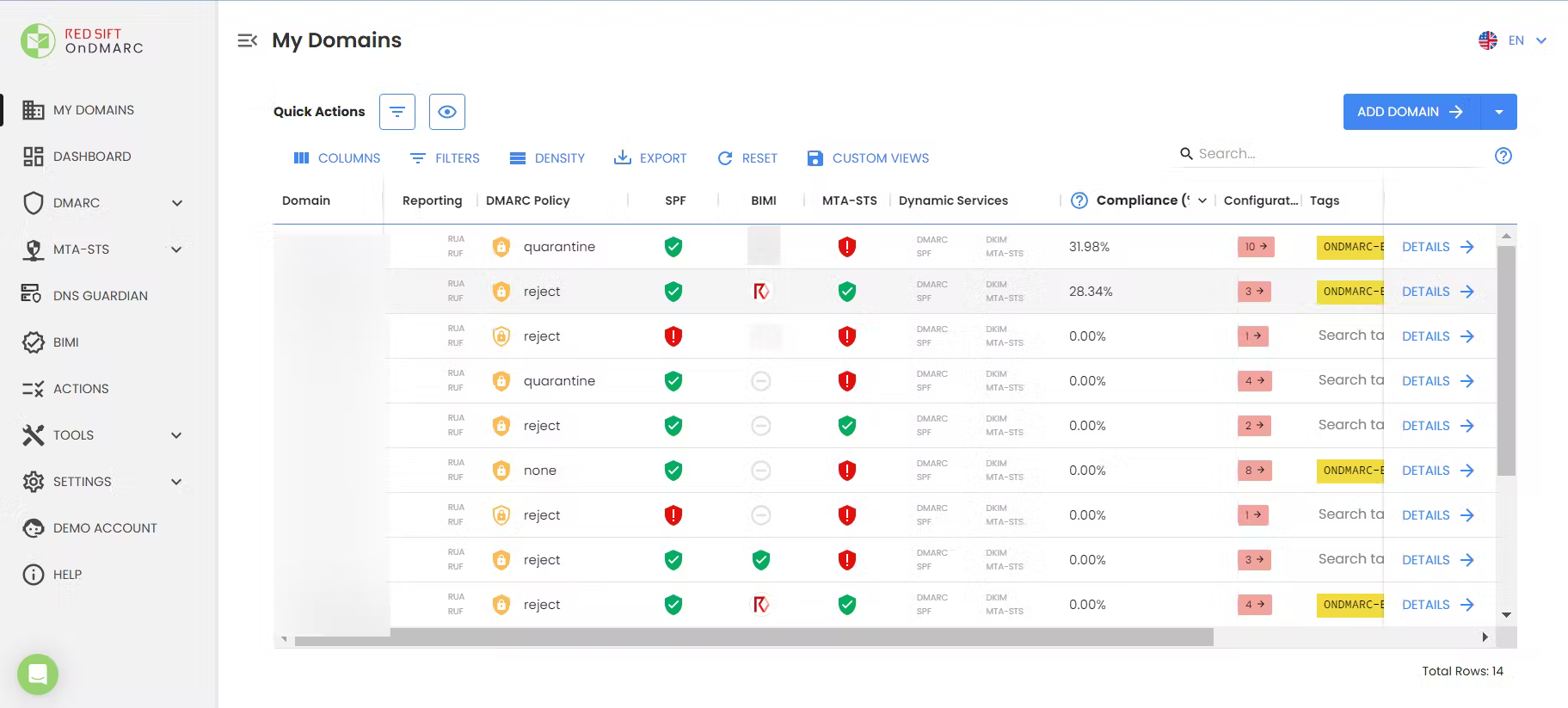
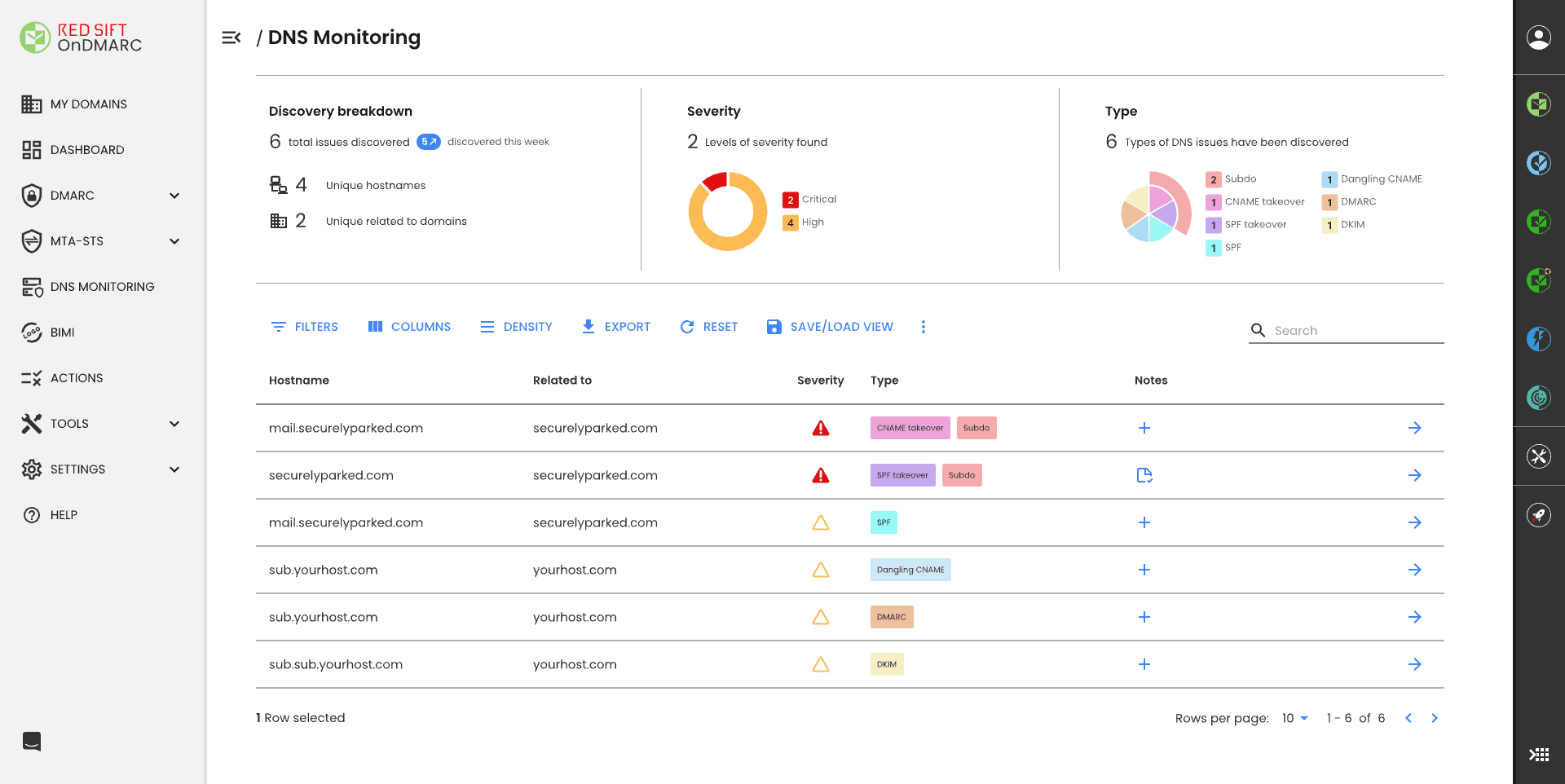
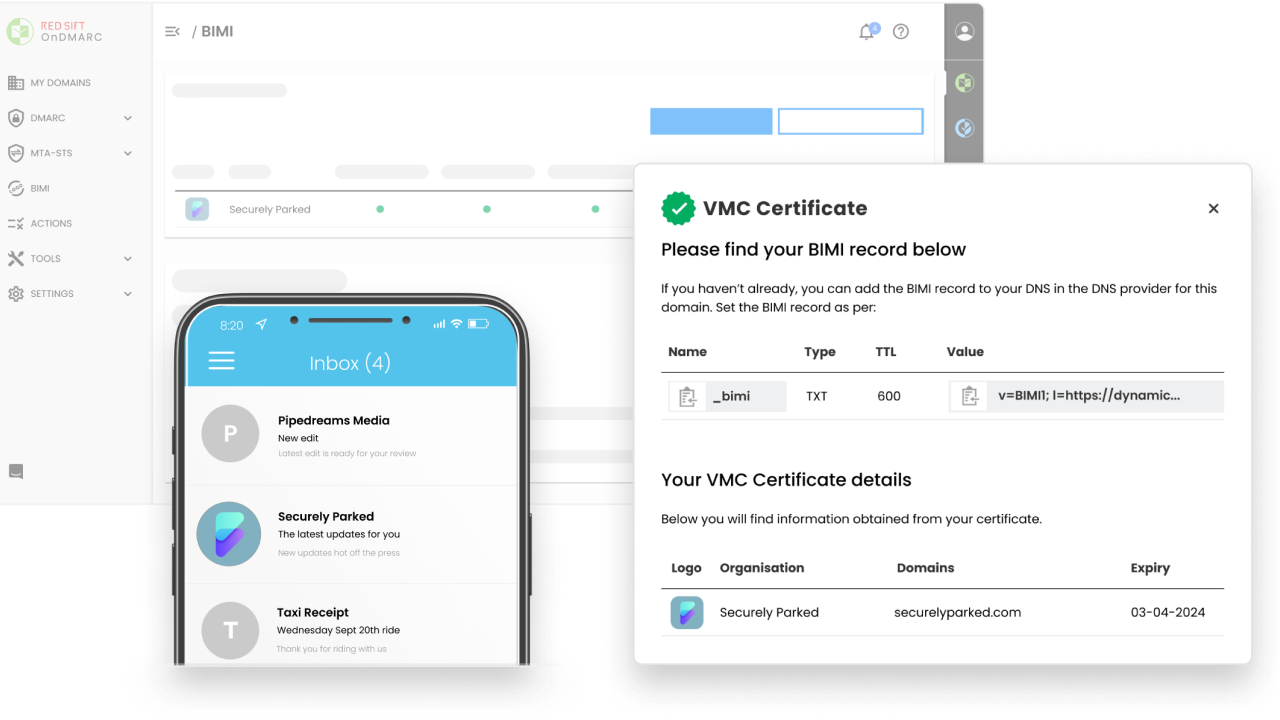
We rank Red Sift OnDMARC highly because of its technical depth and excellent dynamic services. It is particularly strong at helping larger teams manage thousands of domains without getting lost in raw XML data.
Who should use OnDMARC
Large enterprises with global IT teams.
Companies struggling with the 10-lookup SPF limit.
Best features of OnDMARC
The Investigate tool allows you to send a test email and get instant feedback on your setup.
Dynamic SPF effectively removes the stress of managing IP addresses manually in DNS.
Pricing structure
Express Plan: Starts at $9 per month (billed annually).
Essentials and Premier: Require contacting sales for a custom quote.
OnDMARC pros
Powerful dynamic SPF features
Great technical support
Clear roadmap to enforcement
OnDMARC cons
Can be expensive for small domains
UI has a learning curve
3
EasyDMARC
Good for businesses that need a wide variety of security tools in one platform.
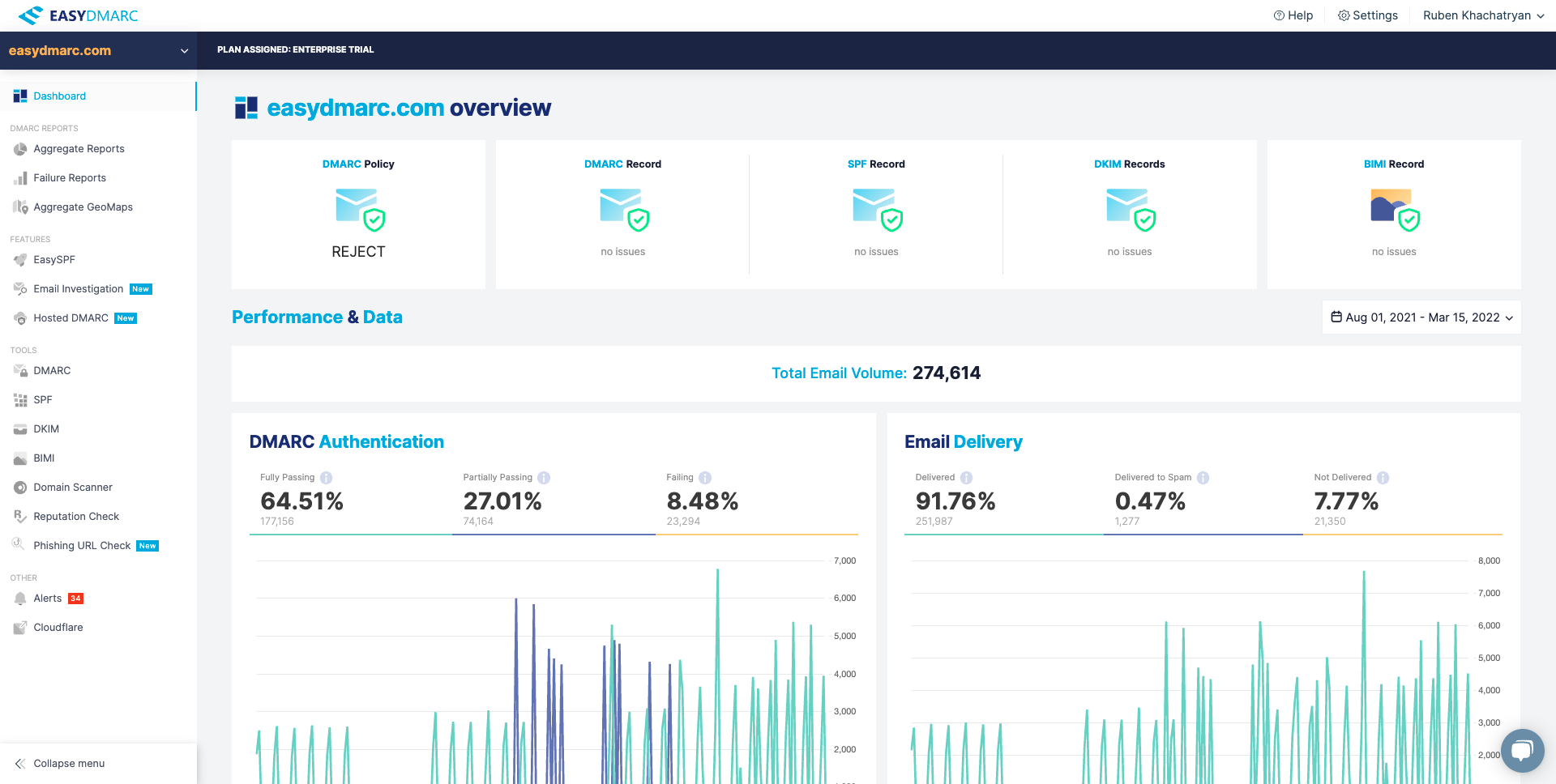
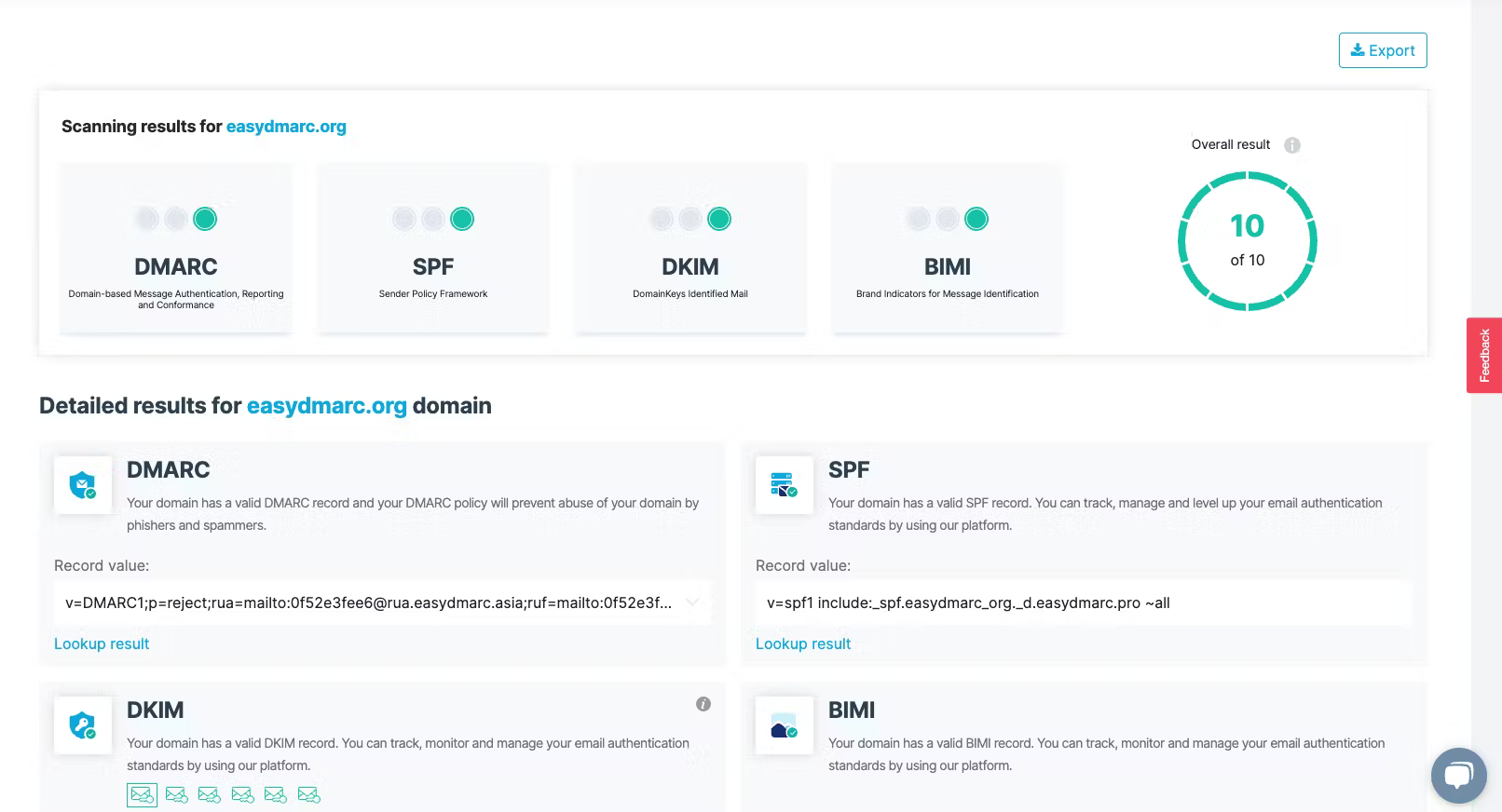
EasyDMARC is a solid all-rounder. We found its interface to be one of the most visually appealing, and its focus on small-to-medium businesses makes it a competitive choice for those starting their security journey.
Who should use EasyDMARC
Small business owners who need guided onboarding.
IT managers looking for a single pane of glass for domain health.
Best features of EasyDMARC
The Managed DMARC feature allows policy changes without logging into your DNS provider.
Aggregate GeoMaps provide a visual look at where spoofing attempts originate.
Pricing structure
Plus Plan: Starts at $44.99 per month for 100,000 emails.
Premium Plan: $89.99 per month for pro-level assistance.
EasyDMARC pros
Very intuitive user interface
Good range of managed solutions
Effective domain scanner tool
EasyDMARC cons
Frequent upsell pressure in-app
Cost scales quickly with volume
4
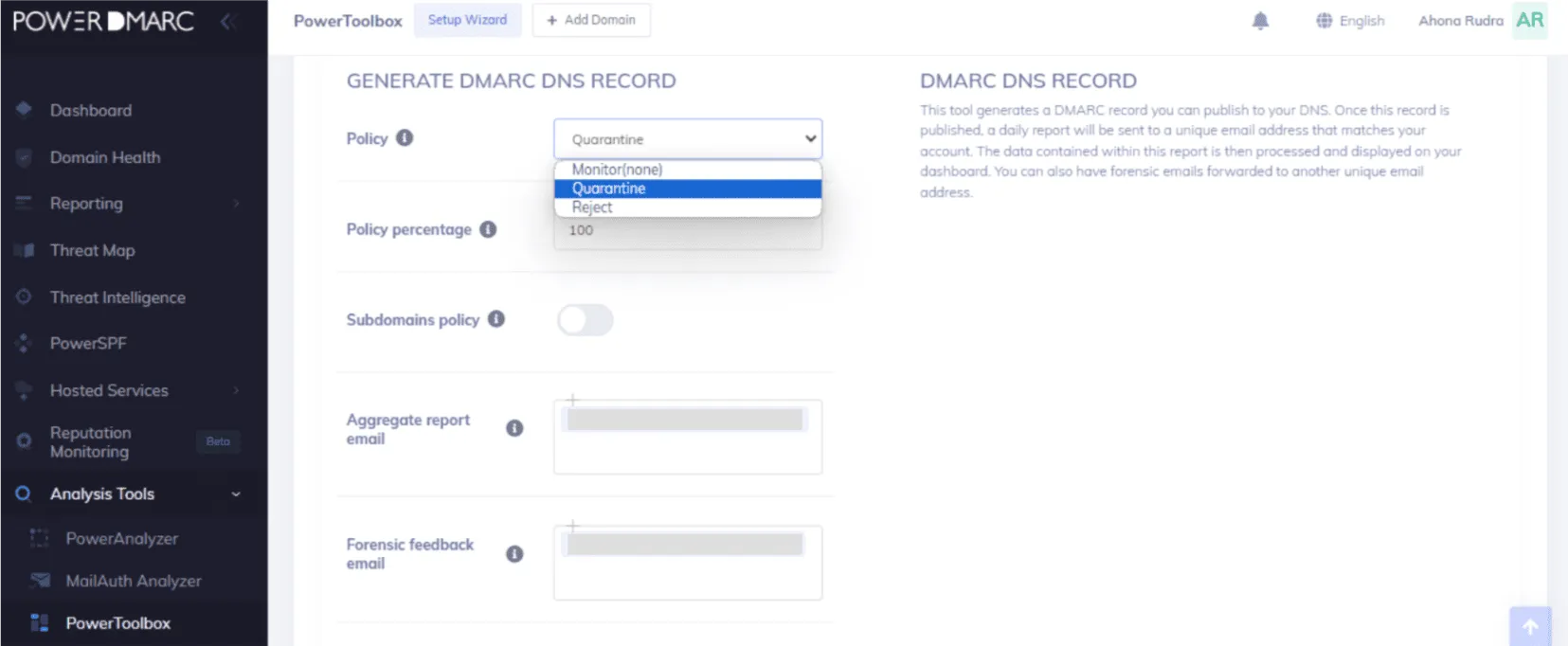
PowerDMARC
Good for MSPs managing security for multiple end-clients.
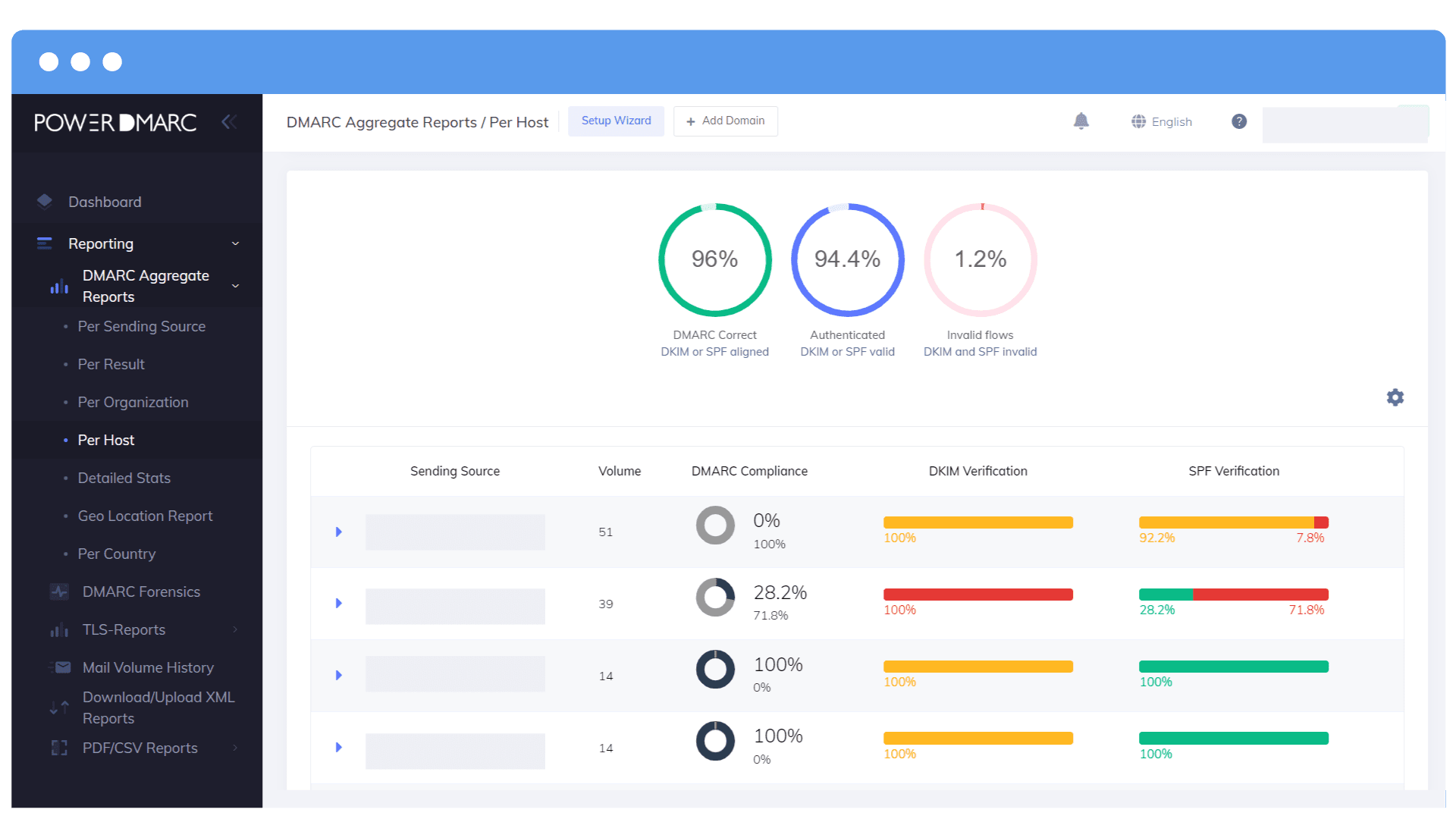
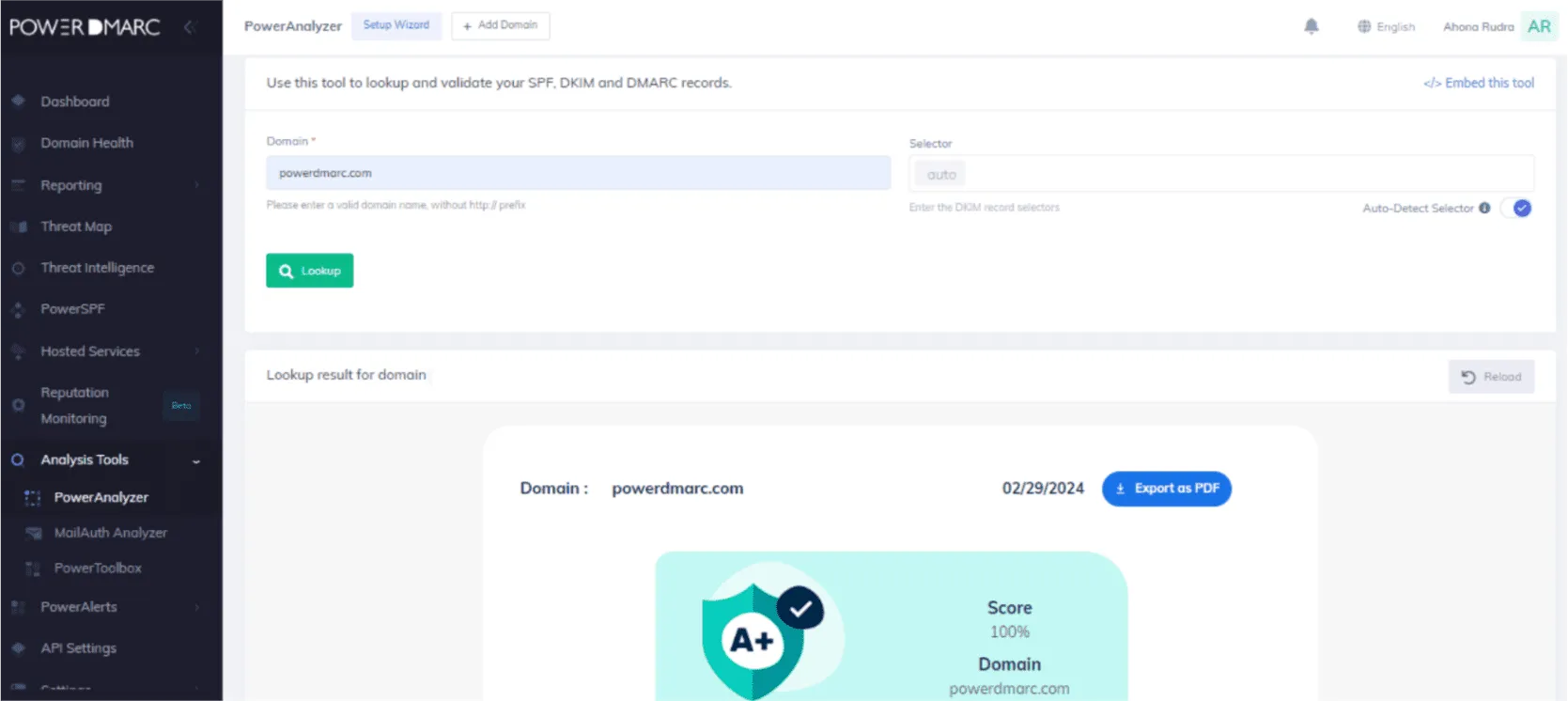
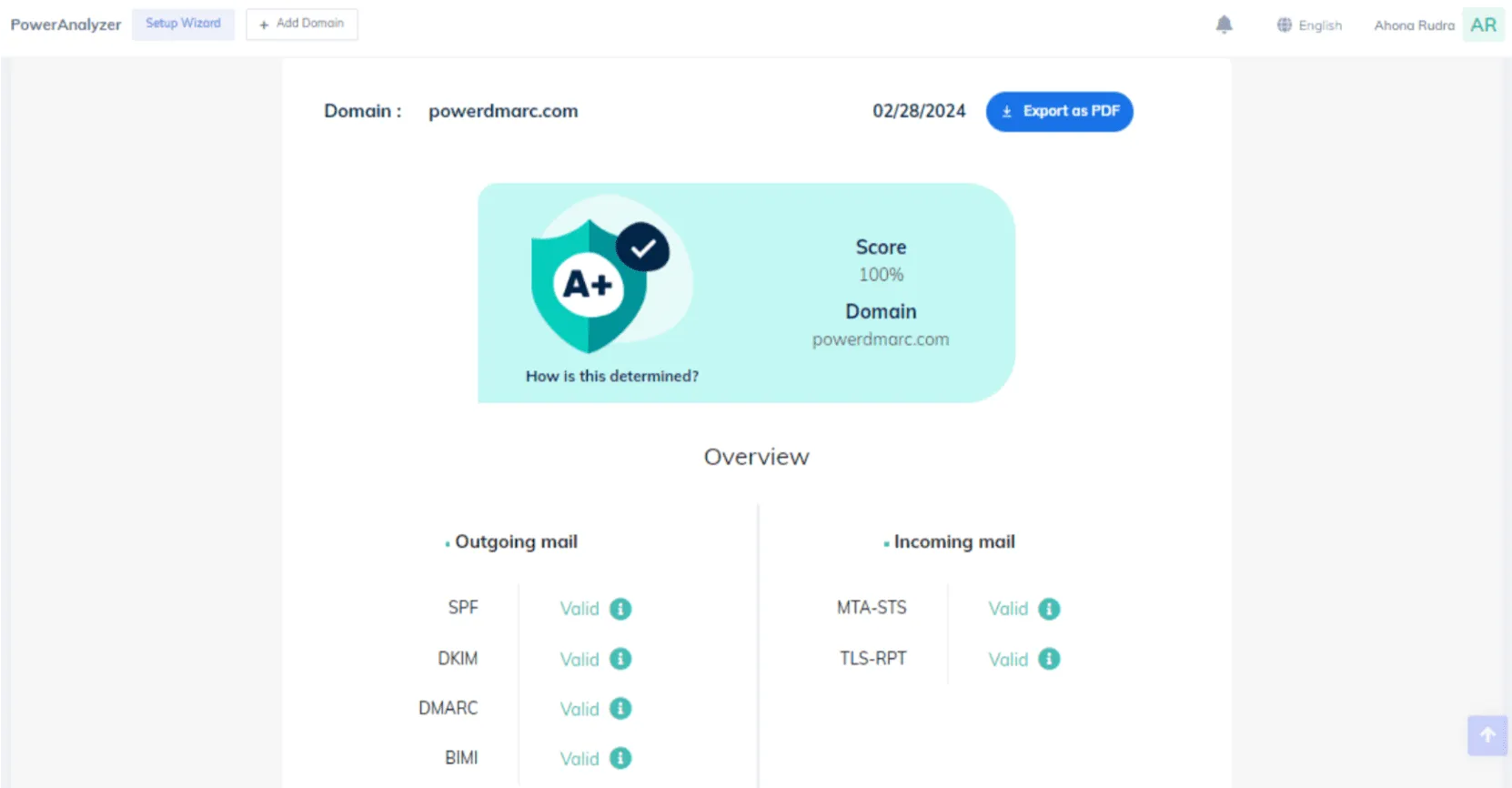
PowerDMARC is a powerhouse for reporting. We ranked it here because of its aggressive feature release schedule and its strong focus on the MSP market, providing excellent white-labeling options.
Who should use PowerDMARC
Security focused MSPs.
Organizations that need to manage BIMI and MTA-STS in one place.
Best features of PowerDMARC
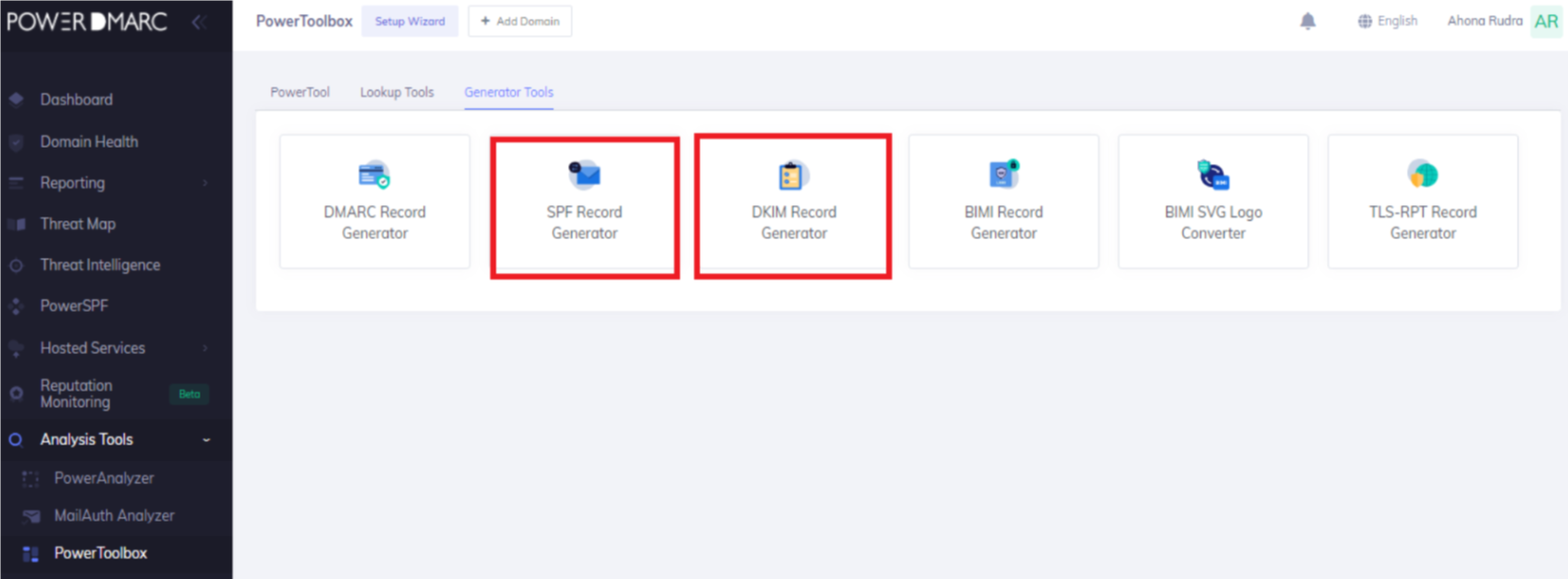
The one-click DNS publishing feature simplifies complex record updates.
PowerSPF provides automated flattening to maintain compliance.
Pricing structure
Free Plan: 1 domain for personal use only.
Paid plans: Generally require contacting sales or using their calculator.
PowerDMARC pros
Extensive feature set
Excellent support response times
Robust MSP program
PowerDMARC cons
UI can feel cluttered
Pricing tiers are not always transparent
5
Valimail
Good for enterprise companies that want a fully automated solution.
Valimail is the legacy leader in automated DMARC. We ranked it at number five because while it is incredibly powerful and virtually hands-off, the pricing is prohibitive for most small-to-medium businesses.
Who should use Valimail
Fortune 500 companies.
Highly regulated industries like finance and healthcare.
Best features of Valimail
Precision sender intelligence identifies services by name immediately.
The automated task list makes reaching enforcement predictable.
Selecting a DMARC tool is about finding the right fit for your specific technical needs and budget. While enterprise giants like Valimail offer massive automation, most businesses will find tools like Suped or EasyDMARC more accessible. The goal is always to reach a state of enforcement so you can protect your brand identity and eventually display your logo through BIMI.