DMARC checker
Look up your DMARC DNS records and analyze for errors.
Check your DMARC record is valid and correct
Live DNS lookup
Run a live DMARC DNS lookup to verify the record receivers use, catch syntax issues, and confirm the policy protects your domain. For ongoing visibility, use Suped's DMARC monitoring to track reports, senders, and authentication failures over time. When you are editing a record, compare the DMARC tags and DMARC policy examples before publishing.
Get started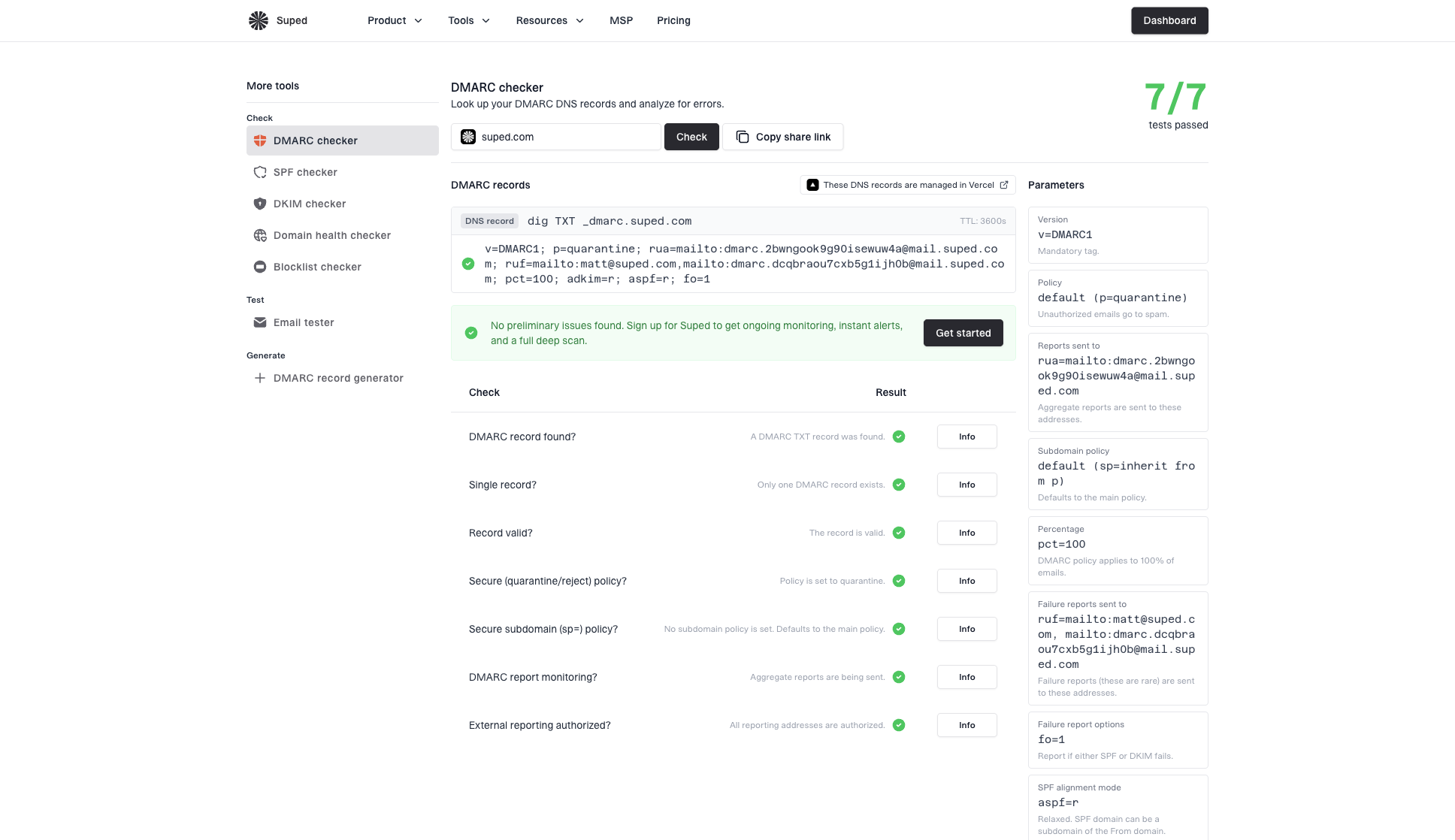


One DMARC checker, endless uses
Use the DMARC checker to validate a new domain, audit a sender before launch, inspect a client's DNS, or confirm a record change after propagation. It turns raw DNS into a readable report so you can catch missing records, unsafe policies, reporting gaps, and authorization issues before they affect real mail.
DNS record
_dmarc.example.com
TXTv=DMARC1; p=reject
Live DMARC DNS lookup
Check the exact TXT record receivers read at _dmarc before you rely on it.
Record found
Single record
Record valid
Syntax and duplicate checks
Catch malformed tags, invalid values, and multiple records that can make DMARC fail.
p=nonequarantinereject
Policy readiness
See whether your domain is only monitoring or ready to quarantine and reject spoofed mail.
DMARC reports
rua=mailto:dmarc@
ruf=mailto:alerts@
Reporting configuration
Confirm aggregate and failure report destinations are published where receivers expect them.
DNS provider
Managed in Vercel
DNS provider context
Identify where the record is managed so the right team can make the fix.
Shareable report
Copy link
Shareable results
Send the same report to a client, vendor, or teammate without screenshots or guesswork.
DMARC checker FAQs
Answers to common questions about validating a DMARC record, reading the results, and deciding what to fix next.
No. It performs a live DNS lookup and reports what is currently published.
It checks whether DNS returns a DMARC TXT record at _dmarc.yourdomain.com. A sending domain should publish one record that starts with v=DMARC1 so receivers know what policy to apply to messages that fail authentication.
DMARC allows one policy record per domain. If multiple DMARC TXT records are published at _dmarc, receivers can discard them, which leaves the domain without an effective DMARC policy.
A valid record starts with v=DMARC1, includes a valid p= policy tag, uses supported tag names and values, and separates tags with semicolons. If the syntax is wrong, receivers may ignore the record.
Use quarantine or reject once legitimate senders pass SPF or DKIM alignment. Start with none if you still need to observe traffic safely.
The sp= tag controls DMARC handling for subdomains. If sp= is missing, subdomains inherit the main p= policy. If sp=none is published, spoofed subdomain mail can remain in monitoring only.
The rua= tag tells receivers where to send aggregate DMARC reports. Without rua reporting, you cannot see which services send mail for the domain, which sources fail, or whether it is safe to enforce a stricter policy.
When DMARC reports are sent to an address on another domain, that destination domain must authorize it with a DNS TXT record. Without authorization, receivers may drop reports for that external address.
The standalone DMARC checker validates DNS records. To see whether a real message passed DMARC, SPF, DKIM, alignment, and related delivery checks, use the email tester.


How MONEYME proactively strengthens domain security and unlocks higher email engagement with Suped
See how MONEYME uses Suped
How cybersecurity specialist Jam Cyber delivers scalable DMARC protection with Suped
See how Jam Cyber uses Suped

How Vision Australia maintains full DMARC enforcement across a large domain portfolio with Suped
See how Vision Australia uses Suped

How The POP Team turns domain checks and DMARC visibility into client ready delivery work
See how The POP Team uses Suped

How DigiBean simplified DMARC monitoring and improved email security for their MSP clients
See how DigiBean uses Suped

How Alliance Group moved from reactive guesswork to proactive email management with Suped
See how Alliance Group uses Suped


Start monitoring your DMARC reports today
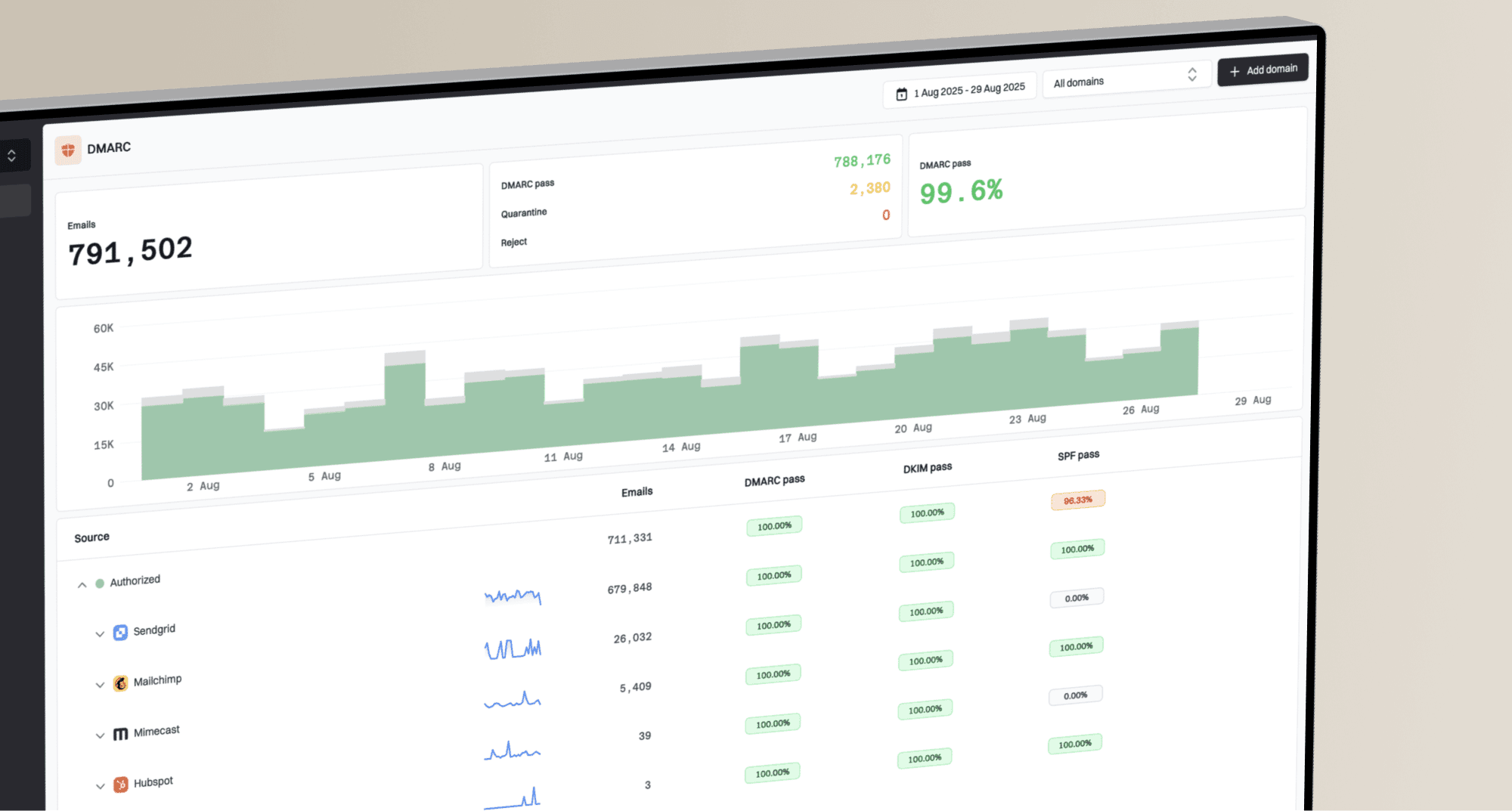
What you'll get with Suped
Real-time DMARC report monitoring and analysis
Automated alerts for authentication failures
Clear recommendations to improve email deliverability
Protection against phishing and domain spoofing