Can URL parameters be captured without a question mark delimiter?
Matthew Whittaker
Co-founder & CTO, Suped
Published 8 Jul 2025
Updated 28 May 2026
8 min read
Summarize with
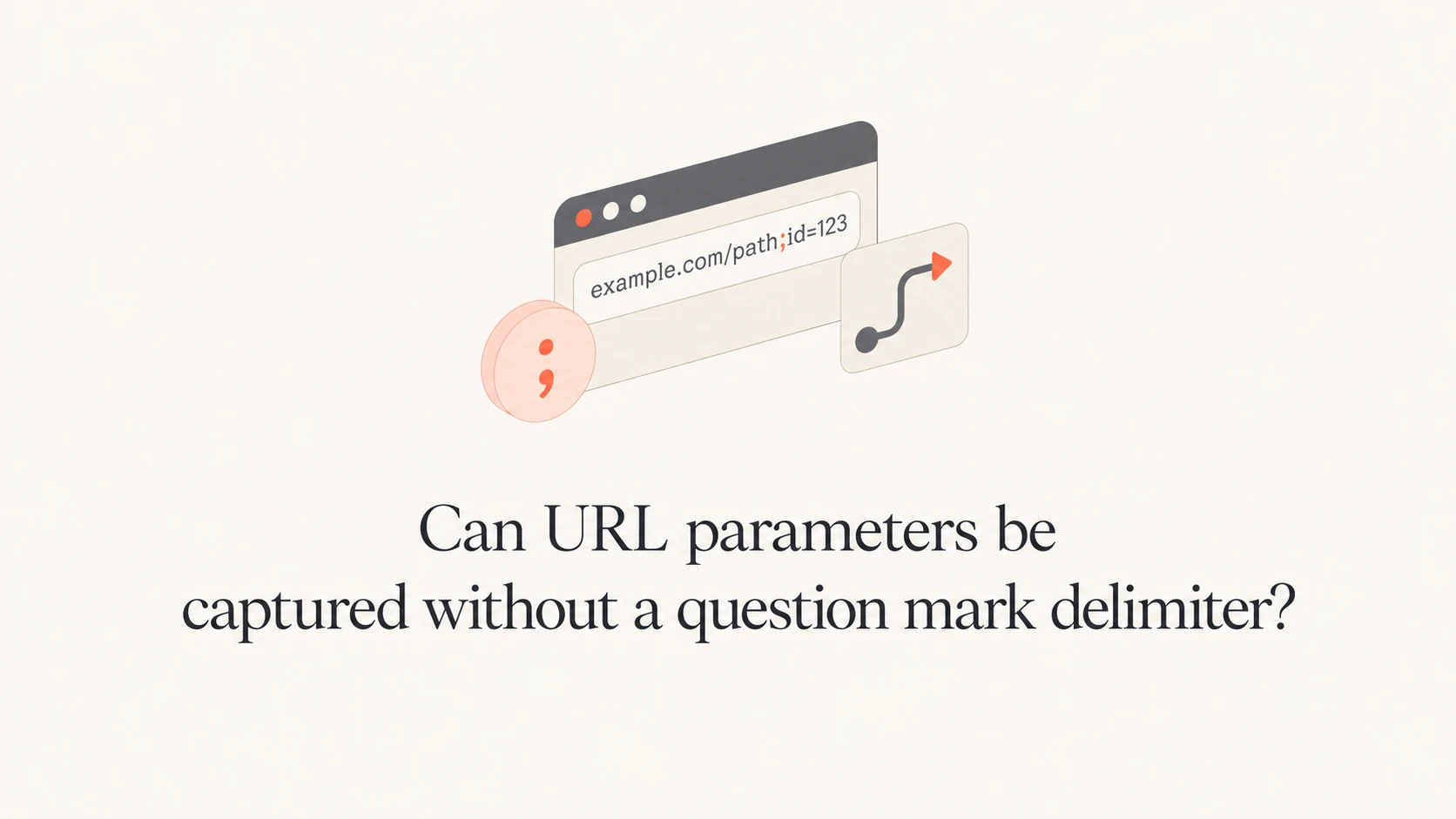
Yes. URL parameters can be captured without a question mark delimiter, but only by code that understands where those values are stored. The ? character starts the standard query string. Without it, values such as ;dc_trk_aid=12345 are part of the path, not part of window.location.search.
That distinction matters. A click-tracking server can read the full request path and parse semicolon-separated values on purpose. A normal client-side analytics script on the final landing page will not see those values as query parameters unless the redirect chain carries them into the final URL, stores them, or exposes them through another deliberate mechanism.
I treat these links as valid but specialized. They are common enough in ad-serving and click-routing systems that their presence alone is not a problem. The real question is where capture happens: at the ad endpoint, at the web server, or in browser-side code after all redirects finish.
How the browser sees this URL
A URL has separate areas for the scheme, host, path, query string, and fragment. The query string begins at the first ?. A fragment begins at the first #. Everything before the fragment is sent in the HTTP request. The fragment stays in the browser and is not sent to the server.
In that example, the browser does not split dc_trk_aid into the query string because there is no ?. A server still receives the path and can parse the semicolon data. A browser script can also read the path if it is running on that same URL, but most marketing analytics code expects values in the query string.
Delimiter
Role
Server visibility
Client parser result
?
Starts query
Sent
Found in search
&
Splits query
Sent
Found in search
;
Path data
Sent
Found in path
#
Starts fragment
Not sent
Found in hash
How common URL delimiters behave
Fast rule
If the data appears before the first hash, the server can receive it. If the data appears after the hash, the server does not receive it in the request.
What changes without the question mark
The question mark is not a universal requirement for passing tracking data. It is a requirement for the standard query-string location. Without it, the data moves into a different part of the URL. That is why one system can track the click correctly while another system appears to lose the same values.
Server-side capture
Request path: The server receives the path and can split values on semicolons.
Custom routing: The endpoint can treat path data as campaign IDs, creative IDs, or click IDs.
Redirect control: The endpoint can forward selected values to the final landing URL.
Client-side capture
Search API: Standard query parsers return nothing when there is no query string.
Path parsing: Browser code must read the path and parse semicolons deliberately.
Redirect loss: After a redirect, the landing page only sees the final URL.
This is the main caveat for marketers and developers. A click server and a landing page do not have the same view of the journey. The click server sees the original request. The landing page sees the URL after every redirect, rewrite, and tracking hop has completed.
That code shows why the same value can be invisible to one parser and visible to another. The query parser checks only the query string. The path parser checks the path segment after the semicolons.
Why ad links use semicolon data
Ad links and click-routing URLs often use formats that look odd compared with ordinary website URLs. They are built for fast server-side routing, legacy compatibility, cache behavior, and internal parsing rules. A semicolon-separated click URL is not automatically broken because it lacks a question mark.
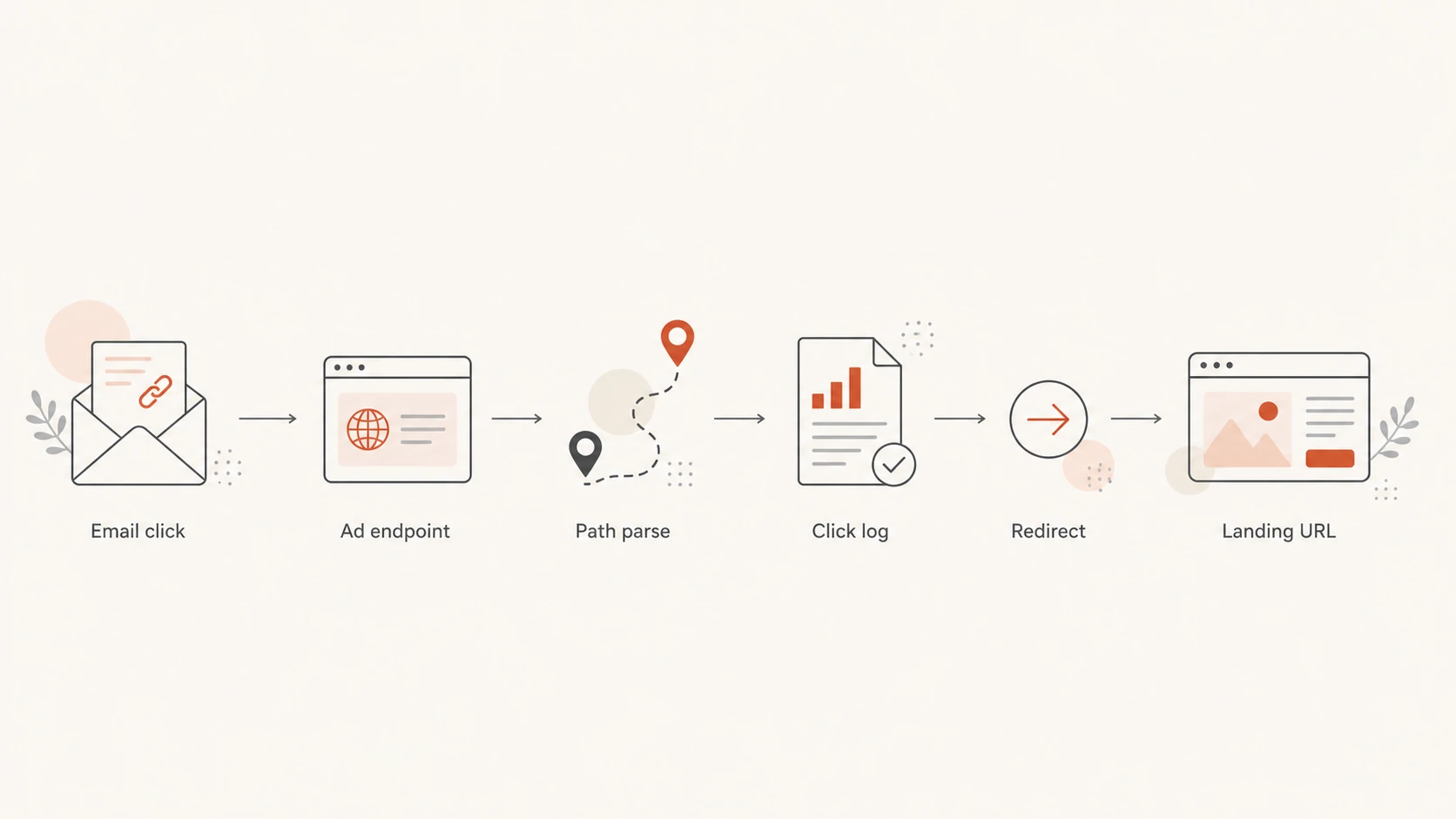
A flowchart showing an email click passing through an ad endpoint before reaching a landing URL.
Ad endpoint: The first server can parse path-style values before sending the user onward.
Stable IDs: Campaign, creative, and placement IDs can live in the path instead of the query string.
Final URL: The landing page receives only whatever the click server includes in the redirect target.
Analytics gap: Browser-side tools miss path values unless they are copied into the final URL or parsed separately.
Do not normalize blindly
Changing semicolons to ampersands or inserting a question mark can break a vendor's click endpoint. Only rewrite the link when you control the destination parser or the platform documentation explicitly calls for the standard query format.
How to test the capture point
I start by separating the raw link from the final landing URL. The raw link tells you what the email or ad contains. The final landing URL tells you what browser-side analytics can read after the redirect chain has finished.
A practical test is to send a real campaign sample to Suped's email tester, click or inspect the rendered CTA, and compare the raw HTML link with the final browser address. That shows whether the values survive redirects and whether they appear in the query string, path, or neither.
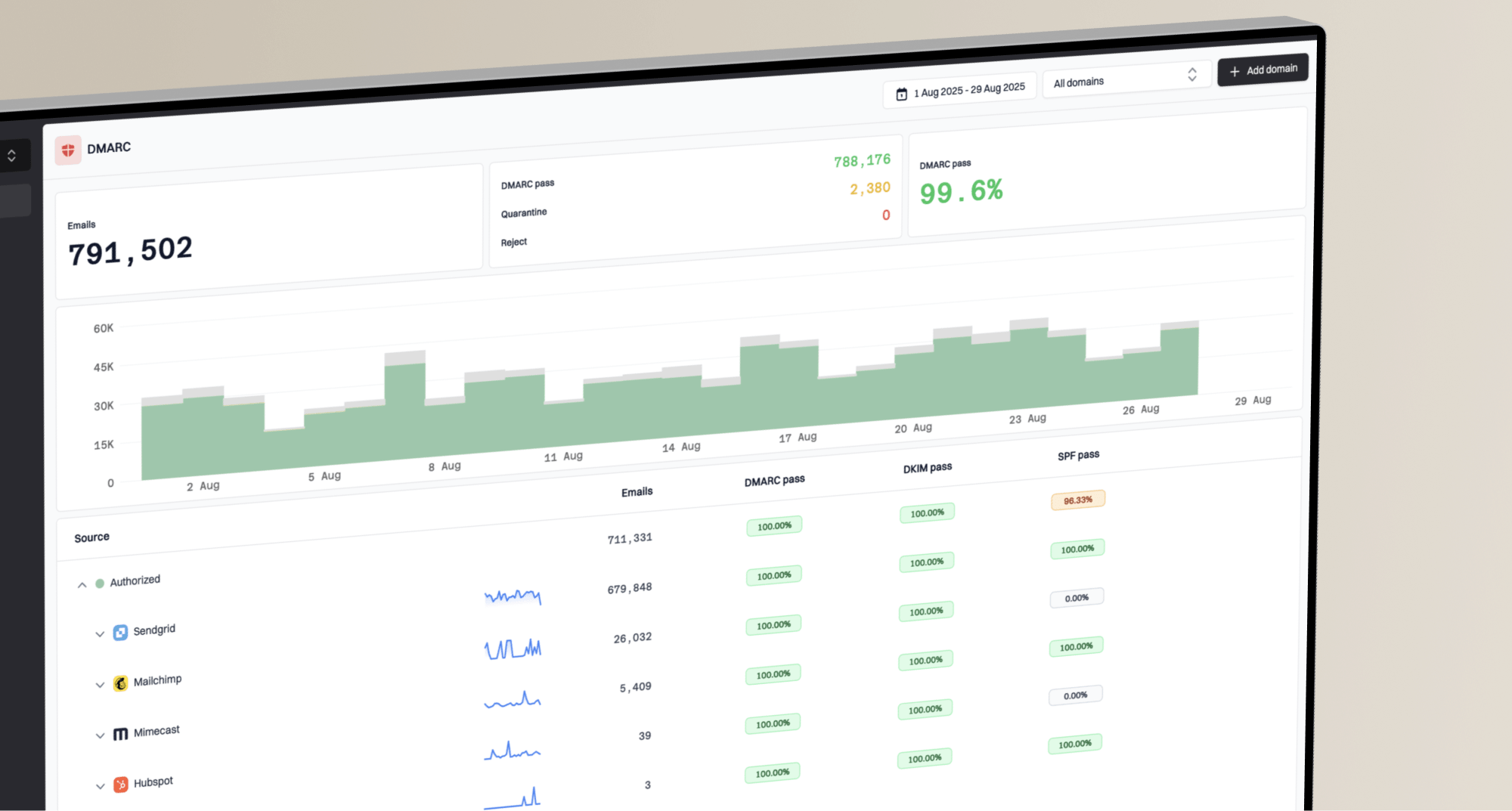
If the same campaign also has authentication or reputation questions, Suped's domain health checker can check the sending domain's SPF, DKIM, and DMARC posture. For ongoing authentication reporting, DMARC monitoring helps connect source behavior with authentication pass rates.
Email tester
Send a real email to this address. Suped opens the report when the test is ready.
?/43tests passed
Preparing test address...
When the goal is client-side capture, check the exact address bar on the final page. If your campaign values are only present in the original ad endpoint URL, your landing page script will not read them through normal query-string methods.
When the goal is server-side capture, ask for the first request target or redirect logs from the click endpoint. That log should show whether the semicolon values were received and parsed before the redirect.
Deliverability and security caveats
The absence of a question mark is not, by itself, a deliverability problem. Filters care more about where the link points, redirect behavior, domain reputation, mismatched visible text, and whether the message looks deceptive. A semicolon path is unusual to some teams, but unusual syntax is not the same as harmful syntax.
The safer approach is to test the rendered email and the redirect chain together. If links are being rewritten, stripped, or expanded, this guide on why email filters modify links explains the broader pattern. If your concern is the tracking scheme itself, the page on HTTP tracking links covers the email-specific risk.
Link tracking risk levels
Use the final clicked URL and redirect behavior, not only the delimiter, to judge risk.
Low risk
Clean
Stable branded domain, HTTPS, expected redirect, clean final URL.
Medium risk
Review
Long redirect chain, unfamiliar syntax, or values lost before analytics.
High risk
Fix
Broken redirect, suspicious mismatch, or listed domain or IP.
Unknown
Test
No clicked-message test or no access to redirect logs.
If a redirect domain or sending IP has reputation issues, Suped's blocklist monitoring can track blocklist and blacklist signals alongside authentication and deliverability checks. That matters more than the choice between a question mark and a semicolon.
Practical fixes when values are missing
If reporting is missing values, fix the capture location rather than forcing every link into a familiar shape. The correct fix depends on which system needs the data.
Confirm final URL: Click the email in a real inbox and record the final browser address.
Check raw HTML: Compare the message link with the post-redirect landing URL.
Inspect server logs: Look for the original request path on the click endpoint.
Pass needed values: Forward campaign values into the final query string when browser analytics needs them.
Keep vendor syntax: Leave path-style ad URLs intact when the vendor endpoint relies on that format.
That format is easier for browser-side analytics because utm_campaign and click_id live in the query string. It does not mean the original semicolon URL was invalid. It means the final page needed a different data shape.
Best operational pattern
Keep the click endpoint format that the ad or email platform expects, then make the redirect output clean and predictable for the landing page. That gives server-side tracking and browser-side analytics their own correct inputs.
Views from the trenches
Best practices
Check the final browser URL, not only the raw ad URL, before judging tracking behavior.
Keep campaign values in the final URL when browser-side analytics must read them.
Treat semicolon tracking as intentional only after the destination endpoint confirms it.
Common pitfalls
Assuming every value after a semicolon reaches normal query string tooling automatically.
Testing copied links instead of the clicked redirect chain the recipient actually follows.
Dropping fragments after the hash into tracking plans, then expecting servers to log them.
Expert tips
Log the first request target and the final landing URL before changing campaign links.
Parse path data deliberately if your ad platform sends values outside the query string.
Use clean final URLs for analytics, even when the click endpoint uses path data.
Marketer from Email Geeks says a missing question mark does not stop server-side capture when the receiving endpoint is built to parse path values.
2024-05-10 - Email Geeks
Marketer from Email Geeks says semicolons can be intentional separators in ad click URLs, even though query strings normally use ampersands.
2024-05-10 - Email Geeks
The practical answer
A question mark is required only when you want standard query-string parameters. It is not required for a server to receive tracking data. If values appear in the path before the first hash, the receiving server can parse them, including values separated by semicolons.
For client-side capture, the answer is stricter: normal query-string code will not capture path-style values. Put the values into the final landing URL's query string, or write code that explicitly reads the path. For email teams, the best routine is simple: test the rendered email, follow the redirect chain, inspect the final URL, and keep authentication and reputation monitoring running in the same workflow.
Suped is useful here because the investigation usually crosses link behavior, inbox rendering, domain authentication, and reputation checks. Its platform brings those checks into one workflow, with automated issue detection, real-time alerts, hosted DMARC, hosted SPF, hosted MTA-STS, SPF flattening, and multi-tenant reporting for teams managing many domains.
Frequently asked questions
0.0
What's your domain score?
Deep-scan SPF, DKIM & DMARC records for email deliverability and security issues.